
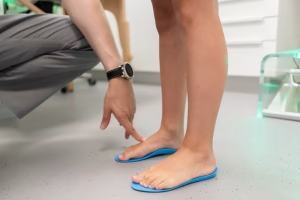
Walk down any pharmacy aisle and you’ll find dozens of insoles promising to cure foot pain. So why would anyone need prescription orthotics from a podiatrist? The answer comes down to fit, function, and the problem you’re trying to solve.
What Store-Bought Insoles Do Well
Over-the-counter insoles are designed for an average foot. They add cushioning, can make shoes more comfortable, and may help with mild, temporary aches. For someone with healthy feet who wants extra comfort for a long day of walking, they can be a reasonable choice.
What Custom Orthotics Do Differently
Custom foot orthotics are prescription devices made from a precise mold of your feet. Rather than simply cushioning, they control abnormal motion, support your arch at the correct height, and redistribute pressure away from painful areas. Because they’re built from durable materials, they often last for years.
Conditions That Often Need Custom Orthotics
- Plantar fasciitis and chronic heel pain
- Flat feet, high arches, and overpronation
- Morton’s neuroma and ball-of-foot pain
- Bunions and hammertoes
- Knee, hip, and lower back pain linked to foot alignment
- Pressure points in patients with diabetes or neuropathy
How to Decide
If generic insoles haven’t helped after a few weeks, or your pain keeps coming back, the issue is likely mechanical and needs a targeted solution. The American Podiatric Medical Association notes that prescription orthotics are designed by foot specialists to address each patient’s specific needs. Patients with diabetes should be especially careful, since poorly fitting inserts can create pressure sores. The CDC recommends protective, well-fitting footwear for anyone with diabetes.
Getting Fitted in Houston
Dr. Ken Dennis evaluates your feet, gait, and symptoms before prescribing orthotics, then checks the fit and helps you break them in gradually. To find out whether custom orthotics are right for you, explore our podiatry services or schedule an appointment at (713) 465-8833.
