
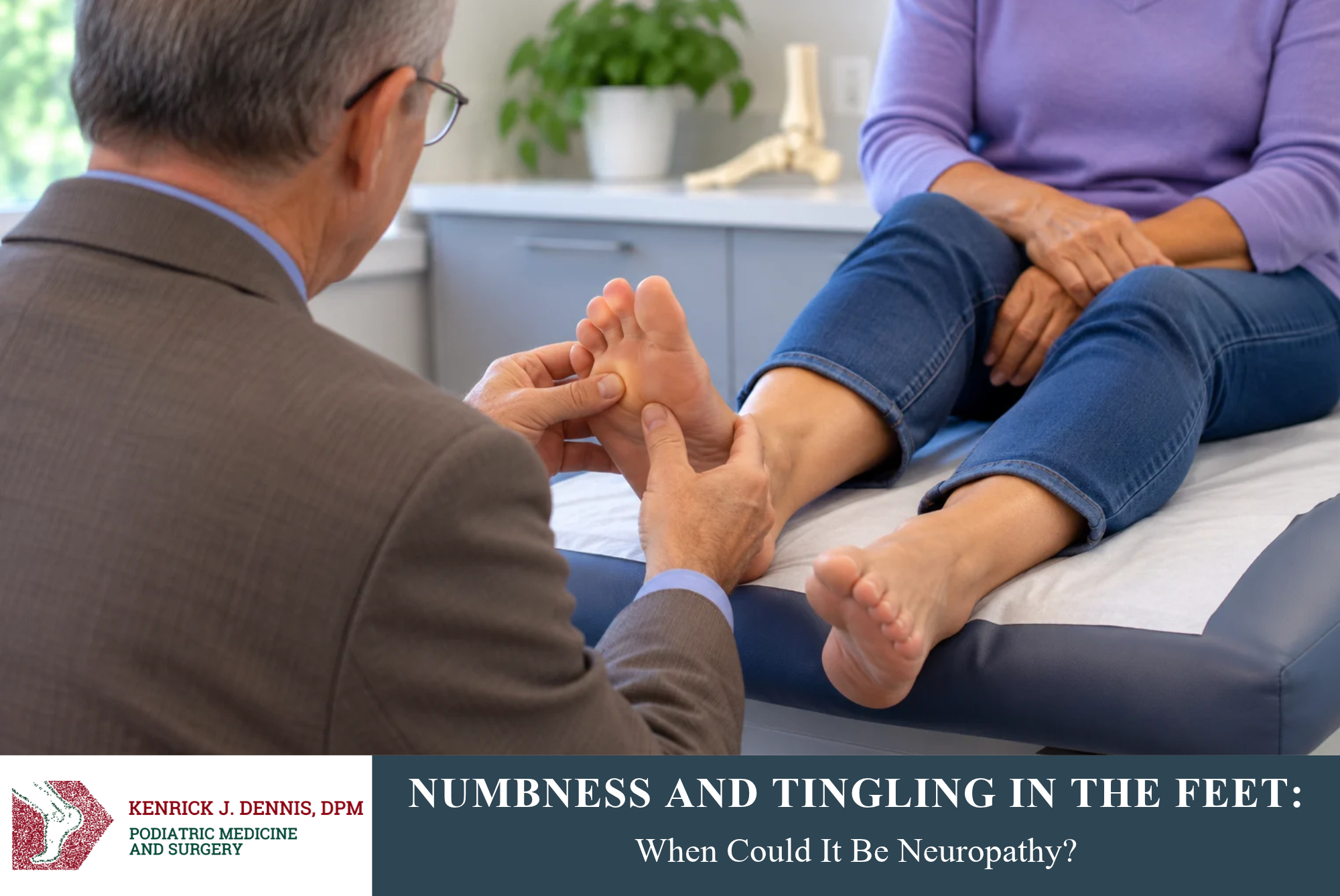
 Occasional tingling after sitting in an awkward position is common. However, persistent numbness, pins-and-needles sensations, or reduced feeling in the feet may indicate a problem affecting the peripheral nerves.
Peripheral neuropathy can interfere with walking, balance, sleep, and the ability to recognize injuries. Because the feet are particularly vulnerable to unnoticed cuts and pressure injuries, early evaluation is important.
At Kenrick J. Dennis, DPM, Dr. Ken Dennis evaluates foot symptoms and helps patients understand when further neurological or medical testing may be appropriate.
What Is Peripheral Neuropathy?
Peripheral neuropathy refers to damage or dysfunction involving nerves outside the brain and spinal cord.
Sensory nerves transmit information about touch, pain, and temperature. Motor nerves help control muscle movement, while autonomic nerves regulate certain involuntary functions.
Neuropathy may affect one nerve, several nerves, or many nerves throughout the body.
What Are the Early Signs of Neuropathy?
Symptoms may include numbness in the toes, tingling, burning, shooting pain, unusual sensitivity to touch, or difficulty sensing temperature.
Some patients develop a stocking-like distribution of symptoms that begins in the toes and gradually progresses upward.
Advanced nerve dysfunction may contribute to balance problems, weakness, and reduced awareness of foot injuries.
What Causes Neuropathy in the Feet?
Diabetes is a major cause of peripheral neuropathy. Other possible causes include vitamin deficiencies, kidney disease, thyroid disorders, autoimmune conditions, alcohol-related nerve injury, and certain medications.
Nerve compression in the ankle or elsewhere may produce more localized symptoms. In some cases, no specific cause can be identified.
How Is Neuropathy Diagnosed?
A podiatric examination may include monofilament testing, vibration testing, reflex assessment, muscle strength evaluation, and examination of the skin and circulation.
Blood tests or specialized neurological testing may be recommended based on the patient’s medical history and examination findings.
Importantly, numbness should not automatically be attributed to diabetes without considering other possible explanations.
How Is Neuropathy Treated?
Treatment begins with addressing reversible or manageable causes when possible.
For diabetic neuropathy, blood glucose management and regular foot examinations are important. Patients with reduced protective sensation may require specialized footwear, pressure management, and preventive foot care.
Medication may help manage painful neuropathy. Physical therapy can improve balance and mobility, while treatment of a compressed nerve may require a different approach.
Frequently Asked Questions About Foot Neuropathy
Is Tingling in the Feet Always Neuropathy?
No. Temporary nerve compression, footwear pressure, and other conditions may produce similar sensations.
Can Neuropathy Affect Only One Foot?
Yes. Localized nerve compression or injury may affect one foot, whereas many systemic neuropathies involve both feet.
Can Neuropathy Cause Balance Problems?
Yes. Reduced position sense and sensation in the feet can make balance more difficult.
Does Neuropathy Always Cause Pain?
No. Some patients experience primarily numbness or reduced sensation without significant pain.
When Should I Seek Immediate Medical Care?
Sudden numbness with weakness, facial drooping, speech difficulty, or other neurological symptoms requires emergency evaluation. Rapidly progressive weakness also warrants urgent care.
Contact Information
Kenrick J. Dennis, DPM Dr. Ken Dennis 902 Frostwood, Suite 250 Houston, TX 77024
Phone: (713) 465-8833 / (281) 469-2676 Website: www.kdfoot.com Make an Appointment: Schedule an Appointment