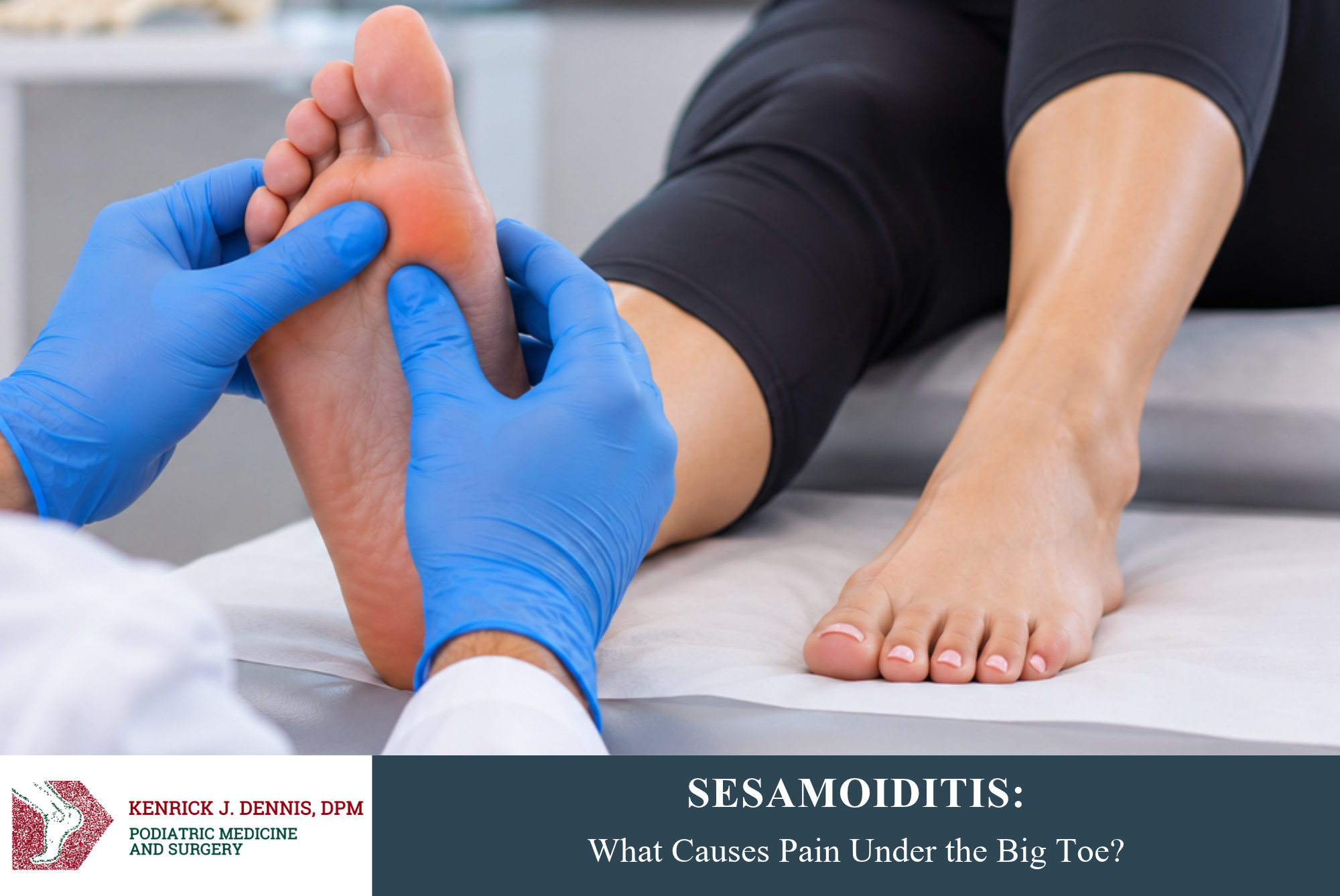
Pain beneath the big toe can make walking, running, and pushing off the ground uncomfortable. One possible cause is sesamoiditis, a condition involving irritation of the sesamoid structures beneath the first metatarsal head.
Because this area absorbs substantial force during movement, repetitive loading can contribute to persistent discomfort.
At Kenrick J. Dennis, DPM, Dr. Ken Dennis evaluates pain beneath the big toe and helps patients understand treatment options.
What Are the Sesamoid Bones?
The sesamoids are two small bones located beneath the first metatarsal head, embedded within the tendons and soft tissues supporting the big toe.
They help distribute pressure and improve the mechanical function of the big toe during walking.
What Causes Sesamoiditis?
Sesamoiditis may develop from repetitive pressure or overuse.
Activities involving running, jumping, dancing, or repeated loading of the forefoot can contribute.
High heels, certain foot structures, and limited cushioning may increase stress in the area.
What Are the Symptoms?
Patients often experience pain directly beneath the big toe joint.
Discomfort may increase when pushing off, standing on tiptoe, or wearing high heels.
Tenderness may be concentrated beneath one of the sesamoid bones.
How Is Sesamoiditis Different From a Sesamoid Fracture?
Sesamoiditis generally refers to painful irritation associated with the sesamoid region, while a fracture involves a break in the bone.
Symptoms can overlap considerably.
Some individuals naturally have a sesamoid bone divided into two or more segments, called a bipartite sesamoid, which can complicate X-ray interpretation.
How Is Sesamoid Pain Diagnosed?
Evaluation may include examination of tenderness, big toe motion, and pressure distribution.
X-rays can help assess bone structure and possible fractures. MRI or other imaging may be useful when symptoms persist or the diagnosis remains uncertain.
What Treatments Help Sesamoiditis?
Initial management commonly focuses on reducing pressure beneath the first metatarsal head.
Options may include activity modification, cushioning, footwear changes, offloading pads, orthotics, or temporary immobilization.
Treatment must account for the possibility of fracture or other bone pathology.
Surgery is generally reserved for selected persistent conditions.
Frequently Asked Questions About Sesamoiditis
Where Does Sesamoiditis Hurt?
Pain is usually located beneath the big toe joint, near the ball of the foot.
Can Running Cause Sesamoiditis?
Yes. Repetitive forefoot loading may contribute to sesamoid pain.
Should I Walk Barefoot With Sesamoiditis?
Barefoot walking on hard surfaces may aggravate symptoms by increasing localized pressure.
Can Sesamoiditis Heal Without Surgery?
Many patients improve with appropriate pressure reduction and conservative treatment.
How Long Does Sesamoiditis Take to Heal?
Recovery varies and may require several weeks or longer, particularly when symptoms have been present for an extended period.
Contact Information
Kenrick J. Dennis, DPM Dr. Ken Dennis 902 Frostwood, Suite 250 Houston, TX 77024
Phone: (713) 465-8833 / (281) 469-2676 Website: www.kdfoot.com Make an Appointment: Schedule an Appointment