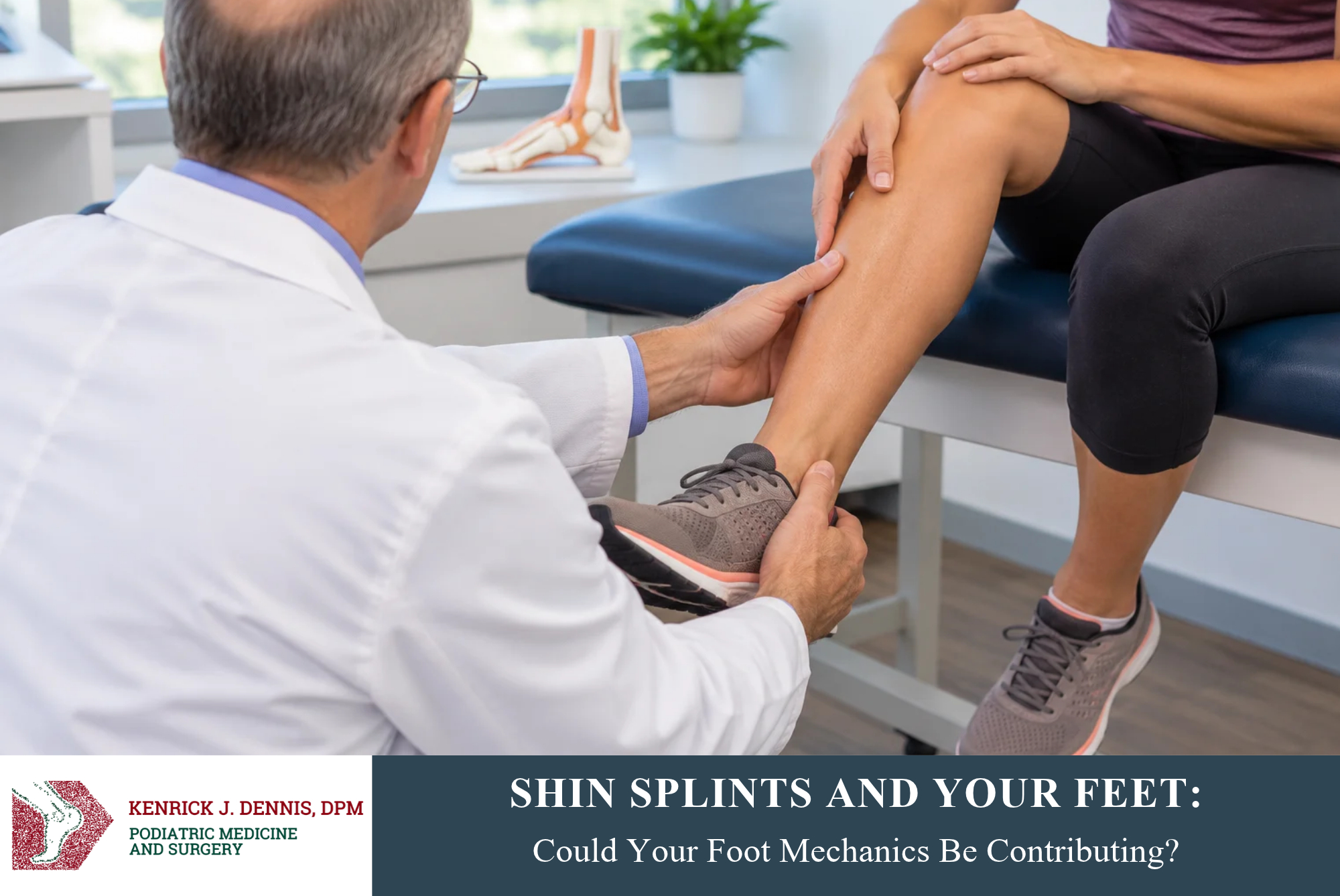
Shin splints are a common source of lower-leg pain among runners, athletes, and individuals beginning new exercise programs. Although symptoms are felt along the shinbone, the way the feet absorb and distribute force may contribute to the problem.
The medical term medial tibial stress syndrome (MTSS) describes exercise-related pain along the inner border of the tibia.
At Kenrick J. Dennis, DPM, Dr. Ken Dennis evaluates foot structure, walking mechanics, and lower-extremity symptoms to help identify contributing factors.
What Are Shin Splints?
Medial tibial stress syndrome is an overuse condition associated with repetitive loading of the tibia and surrounding tissues.
Symptoms typically develop during running, jumping, or other repetitive weight-bearing activities.
The condition is especially common when training intensity or volume increases too quickly.
How Can Foot Mechanics Contribute to Shin Splints?
Foot mechanics influence how forces travel through the ankle and lower leg.
Some studies have identified associations between increased navicular drop, certain pronation patterns, and medial tibial stress syndrome.
However, foot pronation is a normal part of walking and running. It should not automatically be considered abnormal or blamed for every case of shin pain.
Muscle strength, training volume, recovery, and previous injury also influence risk.
What Are the Symptoms of Shin Splints?
Common symptoms include diffuse tenderness along the inner edge of the shinbone and discomfort during exercise.
Pain may initially occur only after running but can become noticeable earlier in activity as the condition progresses.
More localized pain, pain at rest, or persistent pain despite reduced activity may raise concern for a tibial bone stress injury.
How Are Shin Splints Diagnosed?
Diagnosis generally involves reviewing activity patterns, examining the lower leg, and assessing tenderness.
A podiatric evaluation may also include foot alignment, ankle mobility, muscle function, and gait.
Imaging may be necessary when a stress fracture or another condition is suspected.
What Treatments Can Help Shin Splints?
Management usually begins with reducing activities that provoke symptoms.
A gradual return-to-running program, appropriate strengthening exercises, and adjustments to training volume may improve recovery.
Calf strengthening, hip and lower-extremity conditioning, and attention to footwear may be useful.
Orthotics may benefit selected individuals, particularly when specific mechanical factors are identified, but they are not necessary for every patient.
Can Shin Splints Be Prevented?
Prevention focuses on gradually increasing training loads, allowing adequate recovery, maintaining lower-extremity strength, and responding early to recurring pain.
There is no single footwear style or exercise that guarantees prevention.
Frequently Asked Questions About Shin Splints
Can Flat Feet Cause Shin Splints?
Certain foot mechanics may contribute to shin splint risk, but flat feet alone do not establish the cause.
Are Shin Splints the Same as Stress Fractures?
No. Medial tibial stress syndrome and tibial stress fractures are different conditions, although both involve bone-loading stress and may have overlapping symptoms.
Should I Continue Running With Shin Splints?
Running should be modified according to symptom severity. Persistent or worsening pain requires evaluation to exclude more serious injury.
Can Orthotics Help Shin Splints?
They may help selected patients, but treatment should also address training load and muscle function.
How Long Do Shin Splints Take to Heal?
Recovery varies from several weeks to longer periods depending on severity, activity demands, and response to rehabilitation.
When Should I See a Podiatrist?
Seek evaluation when pain persists despite activity modification, becomes highly localized, occurs at rest, or interferes with walking.
Contact Information
Kenrick J. Dennis, DPM Dr. Ken Dennis 902 Frostwood, Suite 250 Houston, TX 77024
Phone: (713) 465-8833 / (281) 469-2676 Website: www.kdfoot.com Make an Appointment: Schedule an Appointment