Healthy circulation delivers oxygen and nutrients to the tissues of the feet. When blood flow becomes impaired, patients may experience pain, temperature changes, delayed wound healing, or other concerning symptoms.
Poor circulation is not a single diagnosis. It may involve arterial disease, venous disorders, or other medical conditions.
At Kenrick J. Dennis, DPM, Dr. Ken Dennis evaluates foot symptoms and helps identify when vascular testing or specialist care may be necessary.
What Causes Poor Circulation in the Feet?
Peripheral Arterial Disease (PAD): Narrowing of arteries, usually associated with atherosclerosis, can reduce blood flow to the legs and feet.
Diabetes: Diabetes increases the risk of PAD and can also cause neuropathy, which may complicate symptom recognition.
Smoking: Tobacco exposure is a major risk factor for peripheral arterial disease.
Venous Insufficiency: Problems with venous return can contribute to swelling, heaviness, skin changes, and venous ulcers.
Other factors include high blood pressure, elevated cholesterol, kidney disease, and certain vascular disorders.
What Are the Warning Signs?
Possible symptoms of arterial insufficiency include foot or calf pain during walking, unusually cold feet, slow-healing wounds, and changes in skin color.
Some patients develop intermittent claudication, characterized by exertional leg discomfort that improves with rest.
Advanced arterial disease may cause pain at rest, particularly at night, or tissue loss.
However, many patients with PAD do not experience classic symptoms.
How Is Poor Circulation Diagnosed?
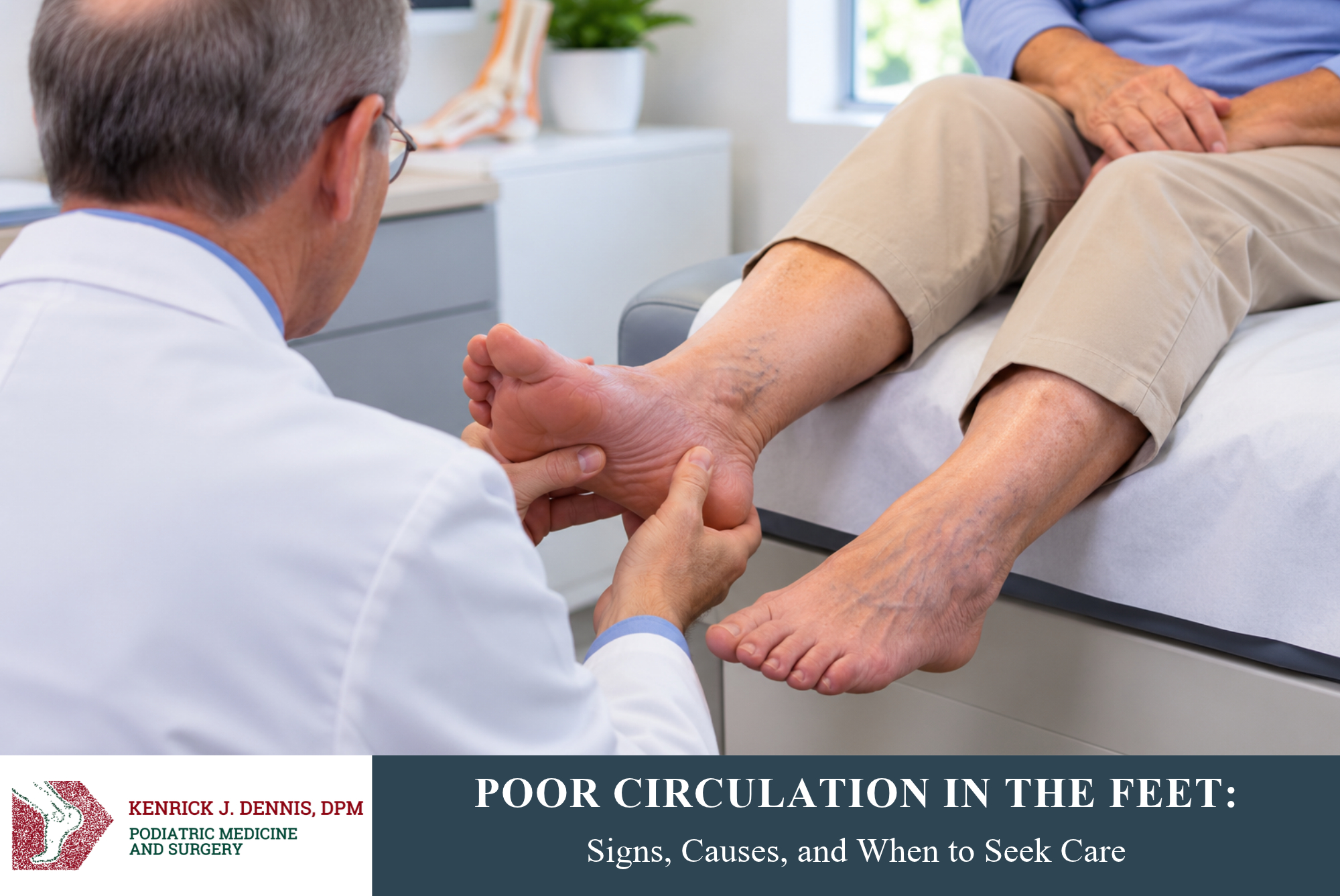
A clinical examination may include assessment of pulses, skin temperature, color, and wounds.
The ankle-brachial index compares blood pressure measurements in the ankle and arm and is commonly used to evaluate suspected PAD.
Toe pressure measurements, Doppler ultrasound, or additional vascular imaging may be appropriate, particularly in patients with diabetes or noncompressible arteries.
What Treatments Improve Circulation?
Treatment depends on the underlying vascular condition.
For PAD, management may include smoking cessation, supervised or structured exercise, cholesterol management, blood pressure control, diabetes management, and medications prescribed according to cardiovascular risk.
Patients with severe disease may require vascular procedures to restore blood flow.
Venous conditions require a different treatment approach.
When Is Poor Circulation an Emergency?
Sudden severe pain, a cold or pale foot, new weakness, or loss of sensation may indicate acute limb ischemia and requires emergency care.
A nonhealing wound, gangrene, or persistent rest pain also requires urgent vascular assessment.
Frequently Asked Questions About Poor Foot Circulation
Are Cold Feet Always a Sign of Poor Circulation?
No. Environmental temperature, nerve disorders, and other factors may cause cold sensations.
Can Poor Circulation Cause Numbness?
Yes. However, numbness can also result from neuropathy or nerve compression.
Does Walking Help Peripheral Arterial Disease?
Structured walking exercise can improve functional capacity in many patients with stable PAD, under appropriate medical guidance.
Can Diabetes Cause Poor Circulation?
Yes. Diabetes increases the risk of atherosclerotic peripheral arterial disease.
Can a Podiatrist Check Foot Circulation?
Yes. A podiatrist can assess vascular warning signs and recommend appropriate testing or referral.
Contact Information
Kenrick J. Dennis, DPM Dr. Ken Dennis 902 Frostwood, Suite 250 Houston, TX 77024
Phone: (713) 465-8833 / (281) 469-2676 Website: www.kdfoot.com Make an Appointment: Schedule an Appointment